Jira AI work breakdown
An AI-assisted way to turn an Epic into actionable child work items.
- Team
- 1 Product designer
1 Product manager
2 Engineers - My role
- Designing screens
Designing and coding interactions
Conducting user interviews
Curating quality training data
Jira
- User base
- 300k+ teams, 10M+ users
- Work items created
- 23M+ monthly
Context
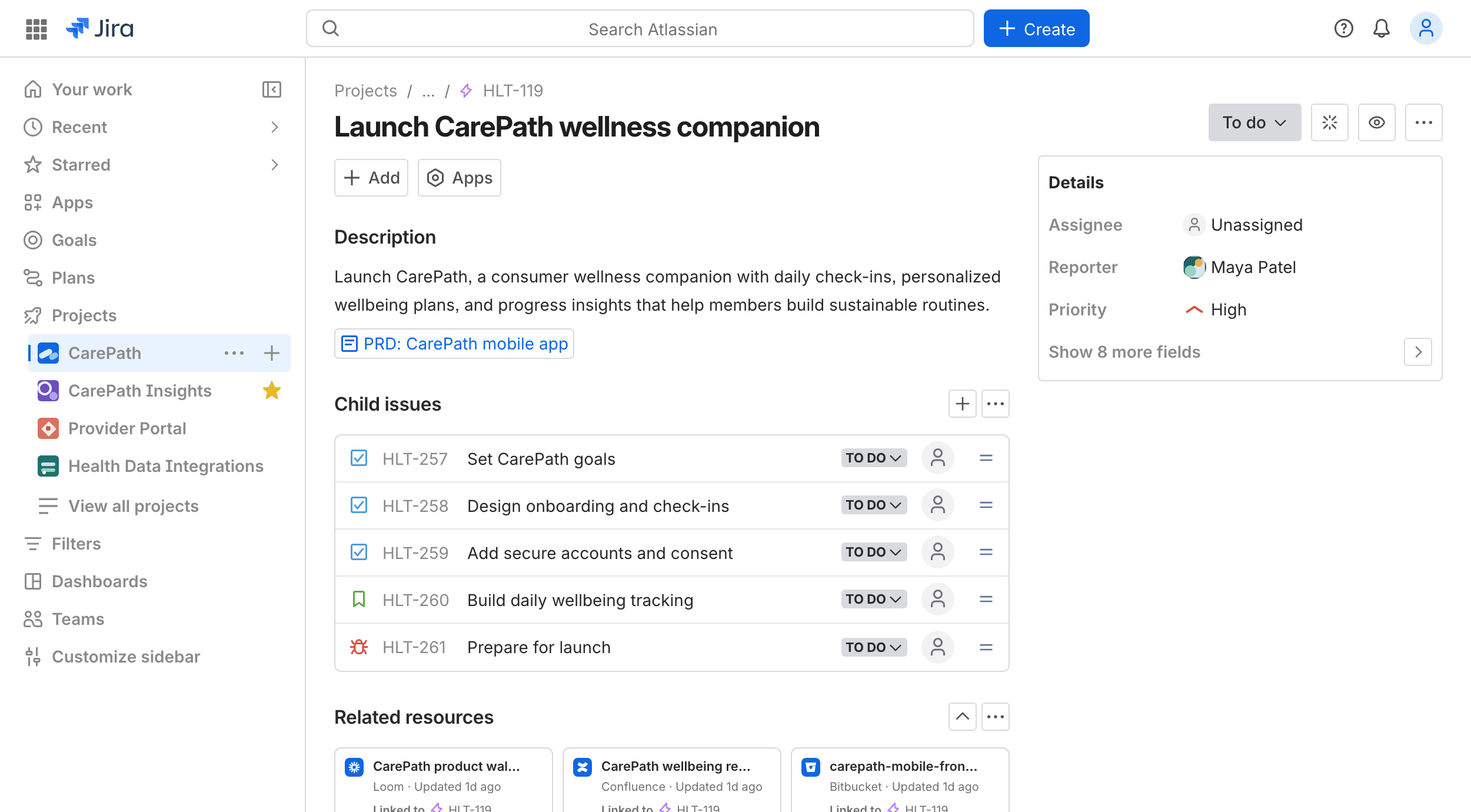
Team leads turn requirements into Epics, then break each Epic into actionable child work issues.
- Task
- Story
- Bug
Problem
154 minutesMedian time spent by teams breaking down each Epic into child work items.
- Participants
- 10 internal teams + 10 customer teams
- Challenge
- Defining every child work item was slow, manual work. How might we make it faster without taking control away from team leads?
Impact
68% reductionMedian Epic breakdown time, from 154 minutes to 49 minutes.
Secondary metrics
- At least 50% of generated child work items were accepted without modification.
- At least 80% of generated child work items were accepted with some modification.
Iteration 1
We began by letting team leads guide the AI through prompts, using the Epic description as context.
We then tested this experience on Atlassian’s internal Jira instance.
Refinements
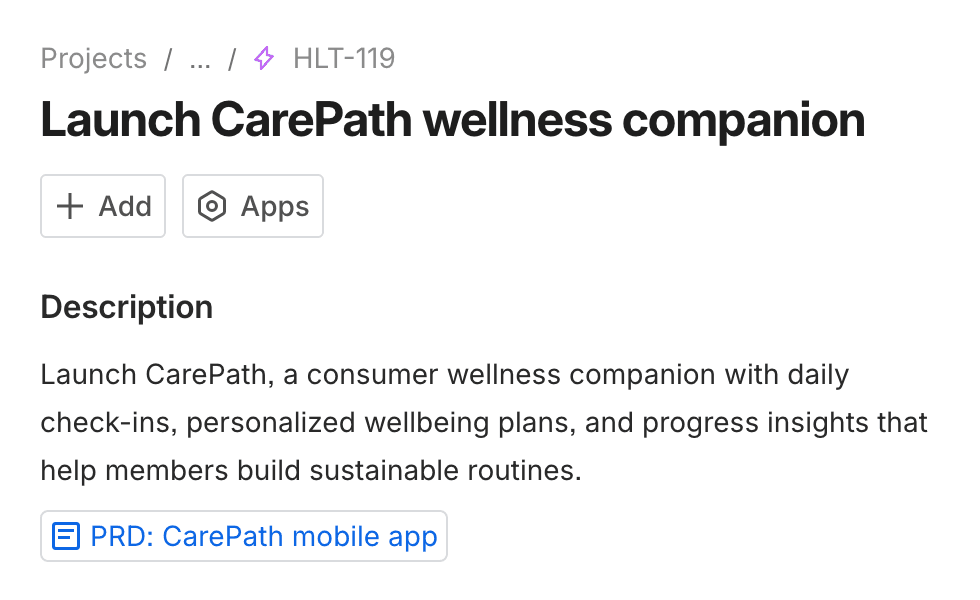
Users often captured relevant information about an Epic in linked Confluence documents in addition to the description field. So we added Confluence as an additional context source.
Iteration 2
We replaced open prompts with explicit Story, Task, and Bug options, backed by curated Epic examples for model fine-tuning.
Final design
The experience automatically creates a first breakdown, then lets teams refine it with prompts or edit individual work items directly.
Presentation
Atlassian’s president presented this experience at the annual company keynote in May 2024.
Future improvements
- Token usage
- External documentation sources
- Semantic search
Learnings
- Continuous user feedback helped us refine the experience as we learned how people actually wanted to work with AI.
- Listing my assumptions explicitly made it easier to challenge them and adjust the design as new evidence emerged.
- Collaborating with teammates across disciplines brought perspectives that helped us balance user needs, technical constraints, and product goals.